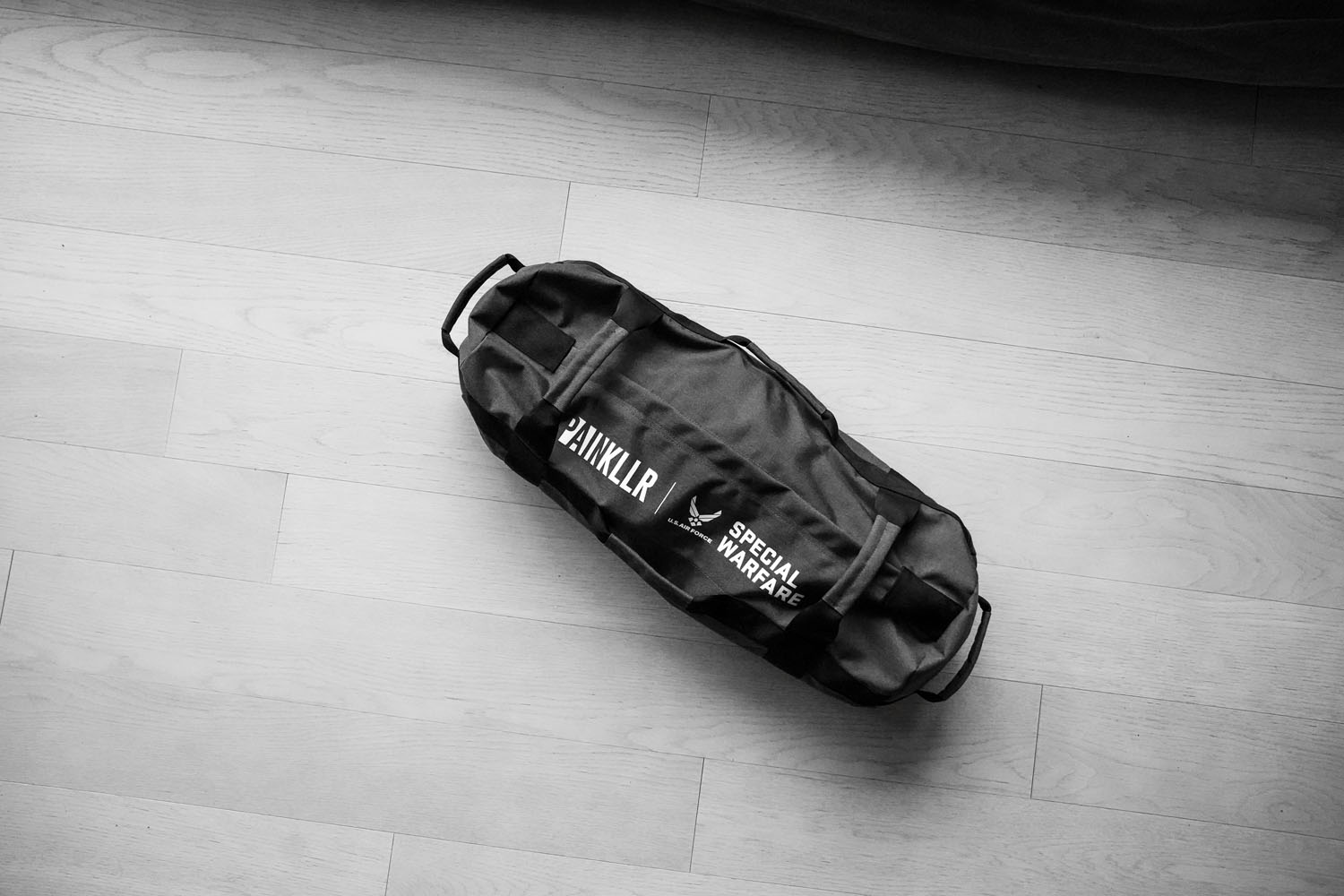
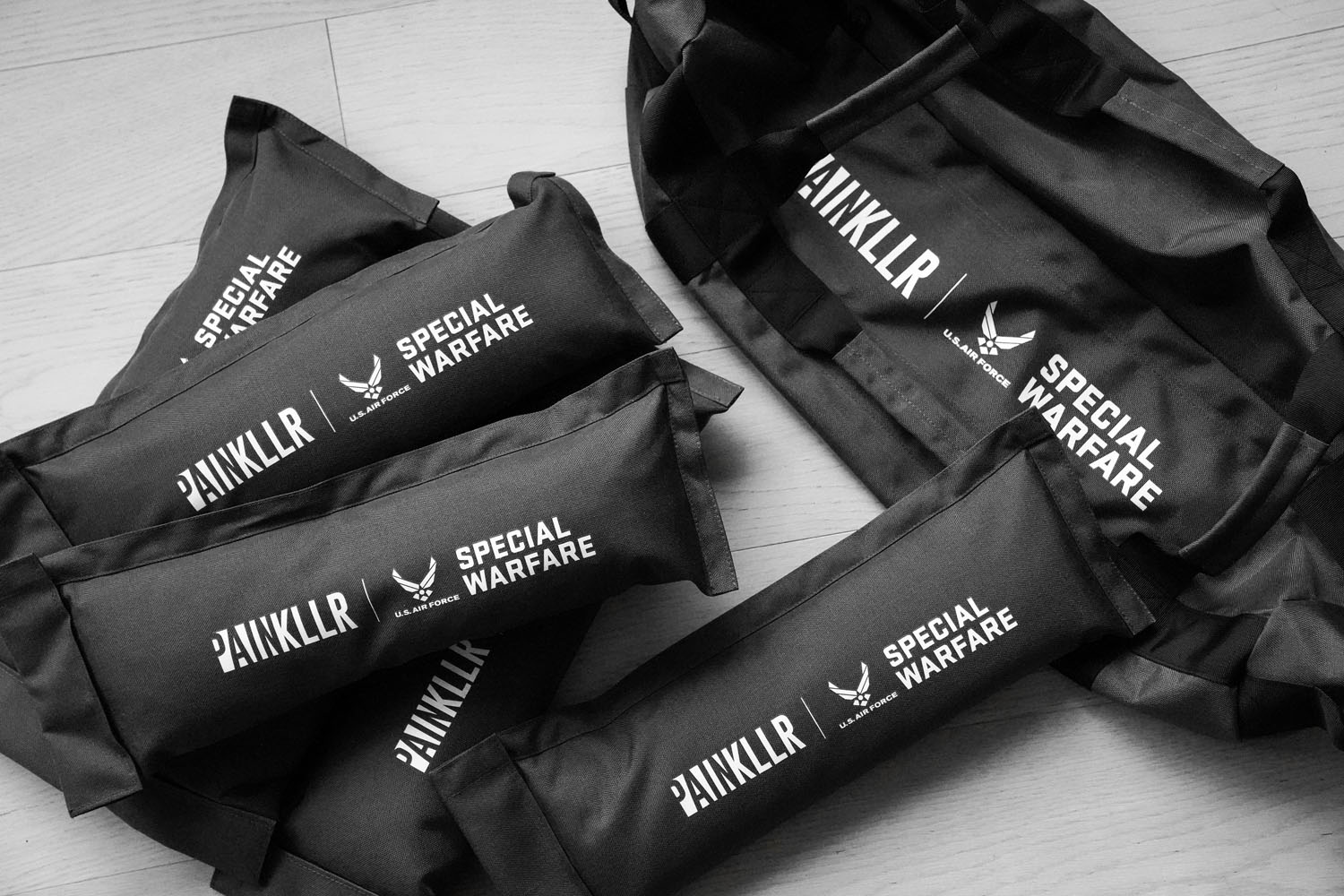
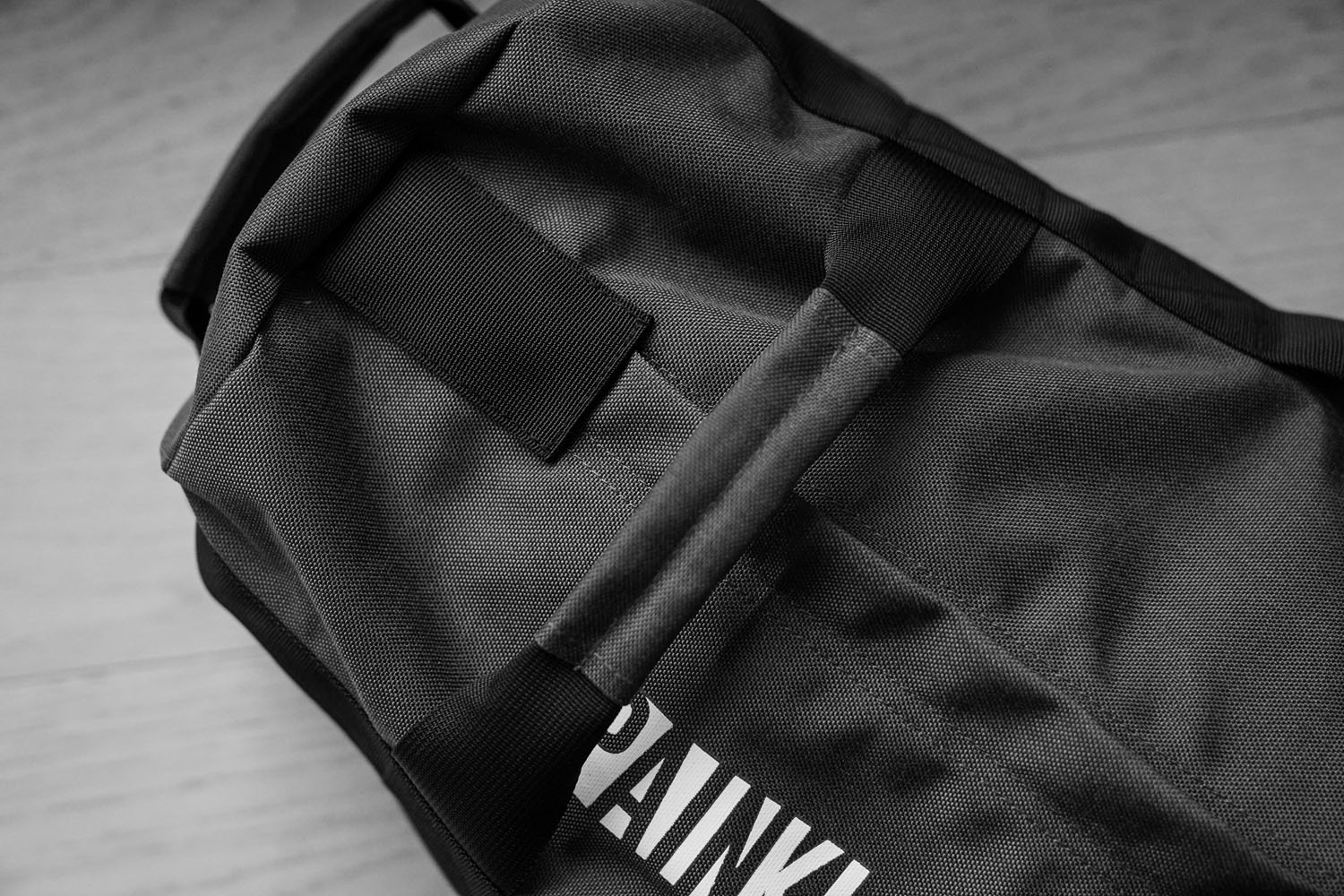
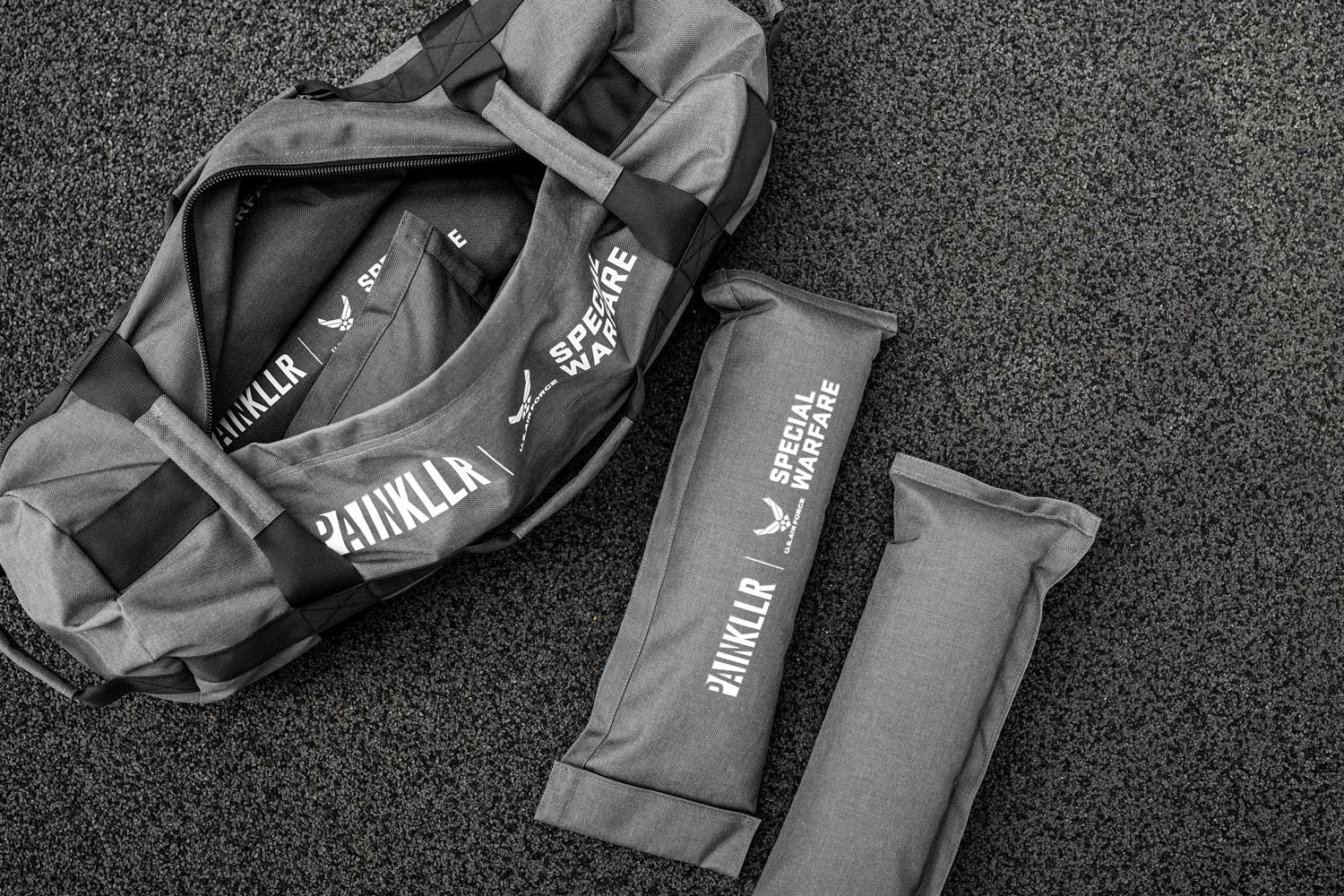
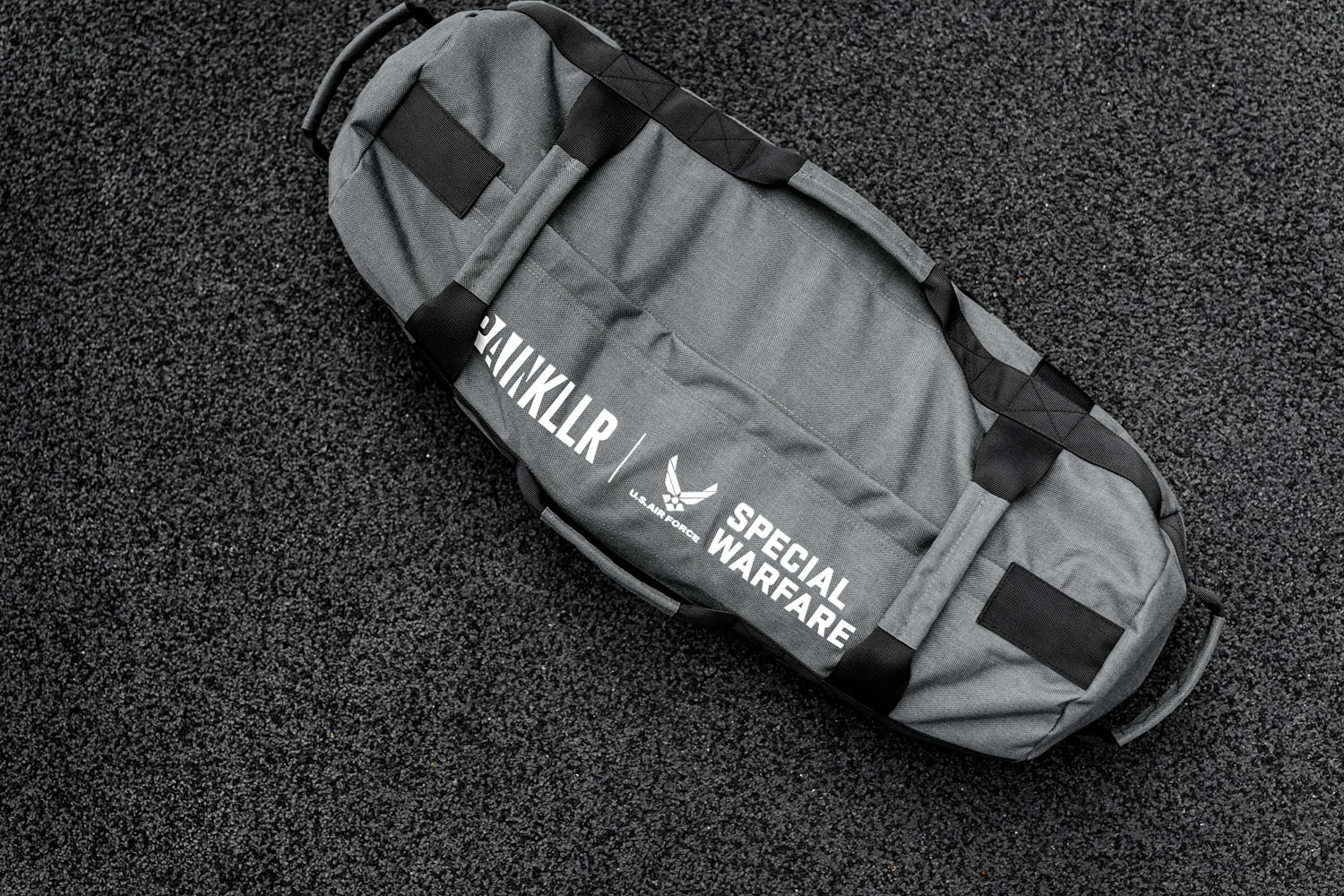
The sandbag was built using 1050D Cordura, selected for its abrasion resistance and ability to withstand repeated impact, loading, and outdoor use. Durability was the priority from the start, with construction decisions made to support long-term performance rather than short-term aesthetics. To increase versatility, the bag was designed with an adjustable weight system ranging from 10 to 60 pounds. This was achieved through a set of branded internal filler bags, allowing users to quickly modify load without compromising balance or structure. Each filler bag was sized for consistency, making the system intuitive and repeatable across different training environments. The result was a straightforward piece of equipment—purpose-built, adaptable, and designed to function across a wide range of athletes and training contexts. The branding remained restrained, allowing the construction and usability of the product to take precedence.
MXKRS produced a 1050D Cordura sandbag with adjustable loading from 10 to 60 pounds, using branded internal filler bags for flexibility and durability.
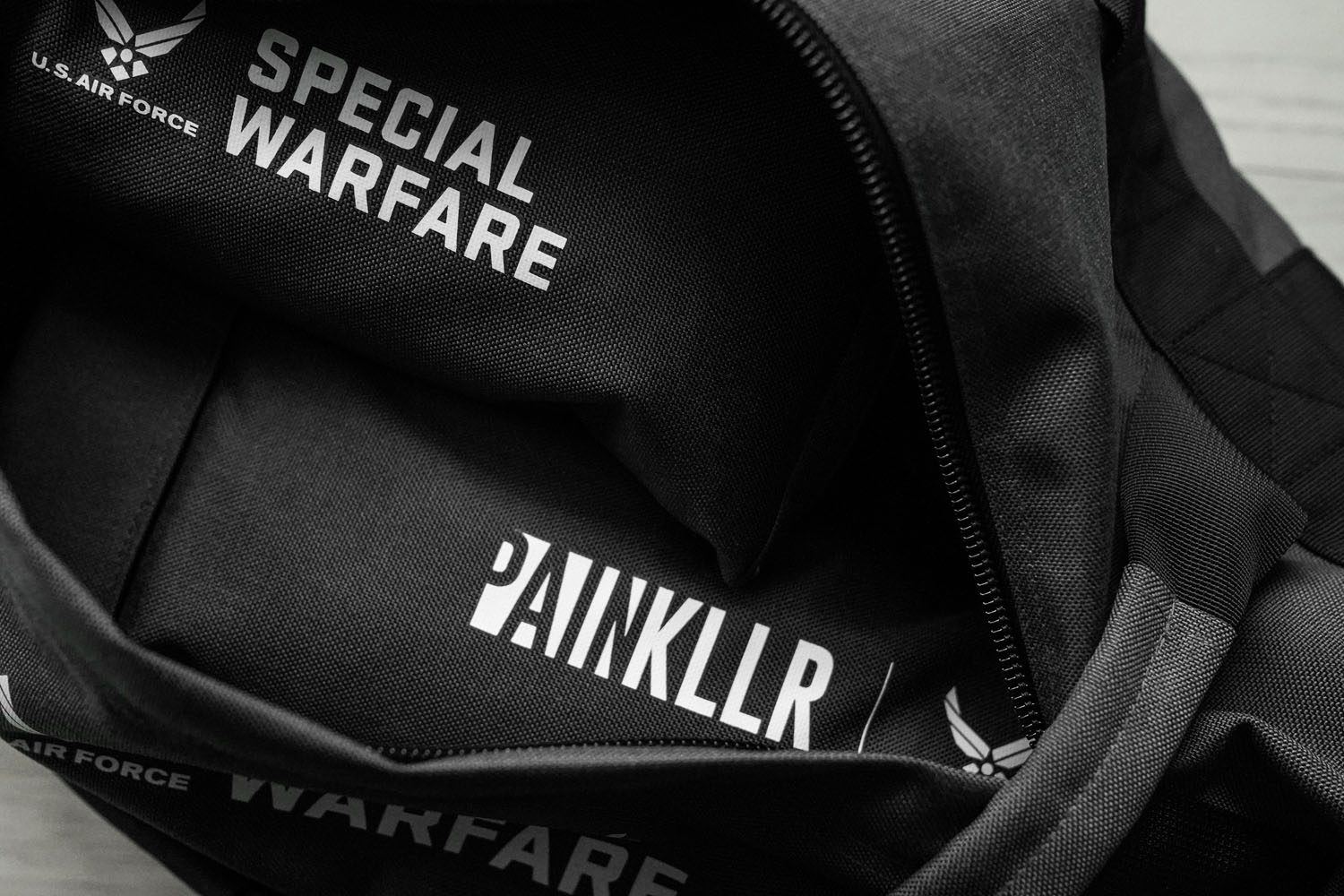
This project reflects MXKRS’ approach to equipment development: start with the use case, select materials accordingly, and build systems that are simple to operate and easy to reproduce. The sandbag wasn’t designed to be flashy - it was designed to work, repeatedly, under load. By focusing on material choice, modularity, and clean execution, the final product delivered exactly what was needed: a reliable training tool that could scale across users without introducing unnecessary complexity. It’s a practical example of how MXKRS approaches functional product development.
The U.S. Air Force Special Warfare sandbag demonstrates MXKRS’ ability to build functional equipment by prioritizing durability, modularity, and repeatable execution.
Next projects.
(2016-25©)